
From Guest to Host: What Does It Mean to Belong?

This reflection was preached by Kay Edwardes at Pip & Jim’s on Sunday 27 September 2026, as part of our Season of Listening — a time of asking what helps people move from being welcomed into a community to truly knowing that they belong.
What is the difference between being welcomed somewhere — and knowing that you belong? And what happens when those who once stood at the door become the people holding it open for somebody else?
The Ethiopian man is perhaps a familiar tale.
Here is a man who is reading the Jewish scriptures but who cannot himself be a Jew. He is visibly the wrong race, to begin with. And then there’s the fact that he has been castrated. Obvious to those who know his job in the Ethiopian court, but maybe not as obvious to someone just passing him on the street in Jerusalem.
It doesn’t matter. He still can never be Jewish.
And yet he’s got himself a copy of the scriptures and is reading them while he travels home.
I wonder how he was feeling
Was he excited to be unpacking the scriptures? We don’t know how much of them he had read, but we know he wanted to understand what he did have.
Was he frustrated? Despite having gone to Jerusalem, despite having started to study the prophets, he was only ever going to be on the outside.
Was he confused? Had he heard someone in Jerusalem talking about this Jesus guy? Maybe they’d even said something about how Jesus said the poor, the disabled, the disadvantaged were all welcome at his party.
Did he think that included him?
Or was he none of these, and simply feeling alienated by this new sect that was springing up?
And then Philip comes alongside him.
How must he have felt when Philip revealed the gospel news to him? Here was something he really did believe in.
The passage the Ethiopian was reading was from Isaiah 53. Isaiah tells the story of Israel, beginning in exile, reaching a climax here, and continuing towards a new covenant and a new creation.
The Ethiopian has reached the climax of the story.
And now he wants to belong in it.
He wants to be part of the future Isaiah has prophesied.
Tradition has it that he did a lot more than simply become part of the story. This man, known to some as Bakos, is honoured as the first person to bring Christianity to Ethiopia. This African eunuch was spreading the gospel message before Paul was converted, before God showed Peter that nobody is unclean.
“What is to prevent me from being baptised?”
Absolutely nothing.
Welcome is not quite the same as belonging
When Ruth gave me these readings, she also gave me a question:
What prevents people from moving from being welcomed to truly belonging?
And it made me really try to pin down the difference.
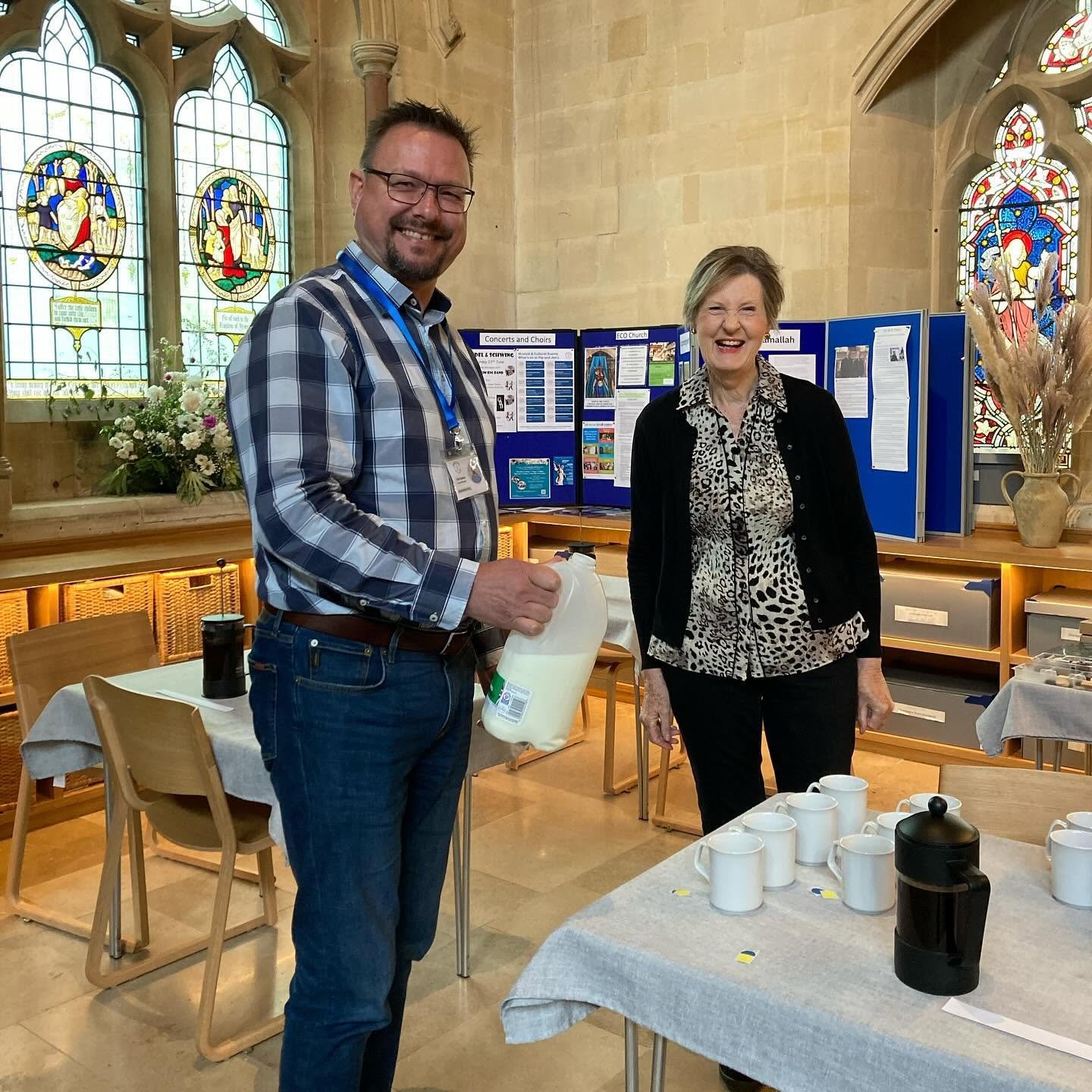
I know I am welcome at my friend’s house when she greets me at the door, makes me a cup of tea and we sit down on the sofa to catch up.
But I know I belong in her house when I let myself in.
She shouts hello from the kitchen, where she’s up to her elbows in the washing up. I make her a cup of tea. We catch up when one of us has put her children to bed.
I’ve even gone so far as answering the door and welcoming other people into her house when she’s been busy.
That was a gradual transition. It took me a long time to feel that I belonged in her house.
And perhaps that is the difference.
Welcome says: we are glad you have come.
Belonging says: this is yours too.
Who gets an invitation?
Contrast that with the guests at the dinner party.
Jesus was a guest at dinner with the leader of the Pharisees. If anyone can be said to belong in Judaism, it was the Pharisees.
So there they are, sitting down for a meal, when Jesus does what Jesus does best and tells a story that sits a little too close to home. A story that feels just a little bit uncomfortable.
Jesus tells of many people being invited to a dinner.
And I reckon quite a few of the guests heard that and thought:
Yes. That’s me. I’ve got my invite.
And then Jesus says those same people snub the invitation.
Some of Jesus’s fellow guests may have got the message: for the people who were invited to God’s banquet so long ago, the Israelites like themselves, the time has come to join him.
Some responded joyfully.
Others missed the point and joined the throng of people making excuses.
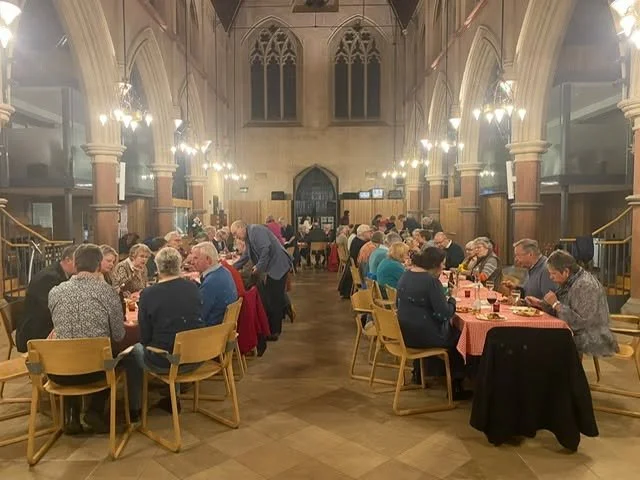
And instead Jesus celebrates with the people who do turn up: the poor, the disabled, the disadvantaged.
By the time Luke was retelling this parable, it wasn’t true that all of those who had first been invited had stayed away. Many Jews had become Christians. They hadn’t made their excuses.
But now they were sitting alongside people they hadn’t expected to see.
The poor.
The disabled.
The disadvantaged.
The Gentile.
The foreigner.
The sinner.
And they join God’s banquet as equals.
From guest to host
And what about us, hearing the parable now?
Many of us have, at some time, identified with the outsiders.
We’ve heard this story and said:
Yes, that’s me. I don’t belong — but I’m here.
And that can be a great place for our faith story to begin.
But there’s more.
Those of us who feel like we belong in church — we do.
We don’t need to hide behind false modesty, saying we’re not good enough. The whole point of the gospel is that we are enough.
You are enough. I am enough.
But when we know that we belong, something changes.
We can’t always listen to this parable as the waifs and strays standing outside the party.
Not anymore.
Because suddenly we’re part of the group who got the invitation.
And perhaps the next step is to move from being party guests to becoming party hosts.
To make the cup of tea for someone else.
To answer the door in someone else’s house.
To notice the person who is hovering at the edge and make space for them not simply to be welcomed, but to belong.
Until one day they are making the tea.
They are answering the door.
They are welcoming the next person in.
And the cycle begins again.
Amen.