
Held Together: A Harvest Reflection on Creation and Justice
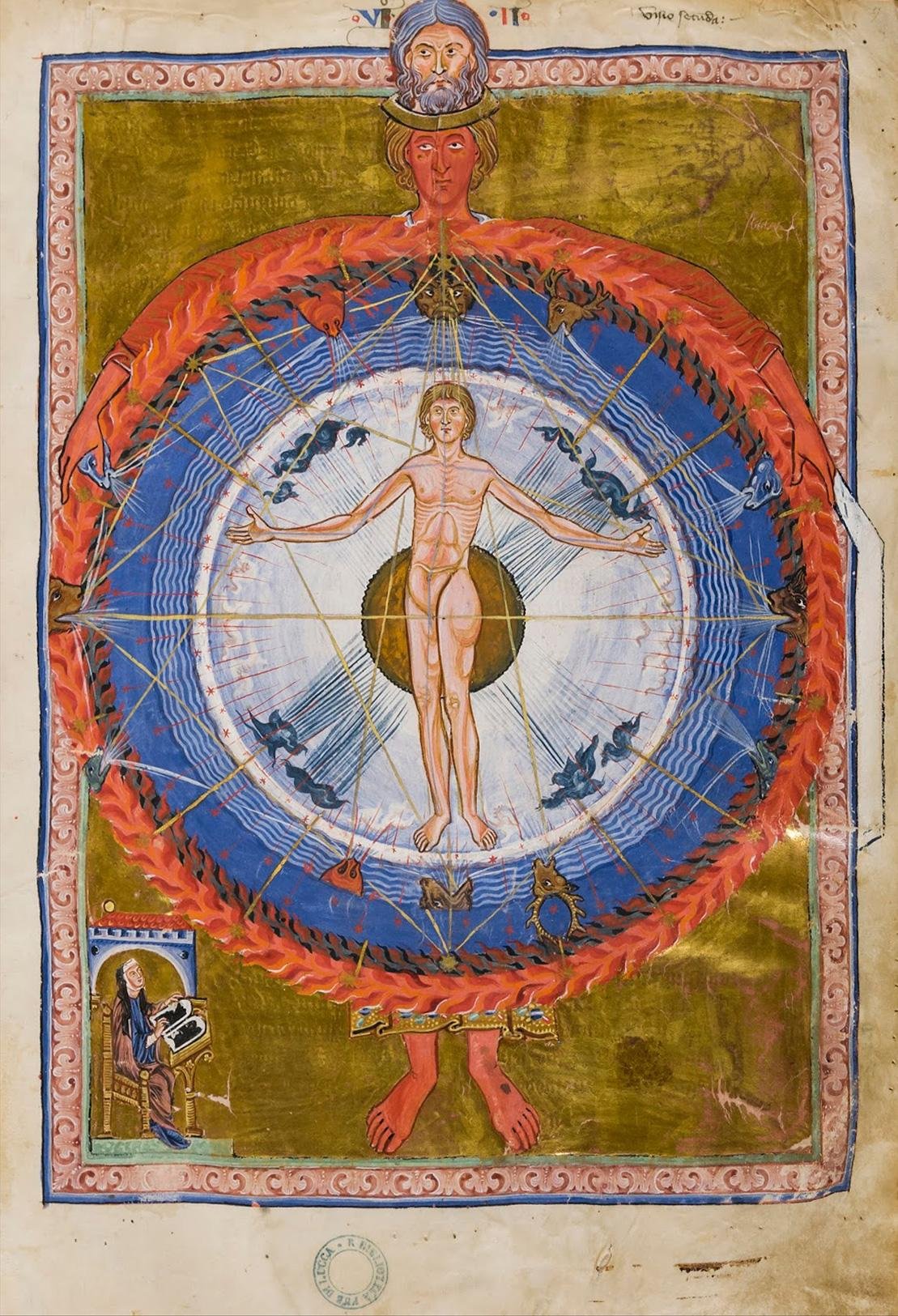
Hildegard of Bingen, The Cosmic Christ / vision from Liber Divinorum Operum (12th century). Hildegard imagined creation not as a collection of separate things, but as a living whole held within the life and love of God.
A Harvest reflection by the Revd Ruth Edmonds | Sunday 4 October 2026
Aren’t the Harvest flowers beautiful? All those hydrangeas from Sophie’s garden.
The colours. The care people have taken arranging them.
Harvest invites us to stop and notice. To give thanks for food, for soil and rain, for farmers and gardeners. For the extraordinary fact that seeds disappear into dark earth and return carrying life.
But an honest Harvest asks us to look again.
Whose hands planted this food? Who picked it? Who packed it?
The food before us tells a story of abundance.
But abundance is not the whole story.
Paul writes:
“In Christ all things hold together.”
All things.
So if all things are held together in Christ, why do we tolerate ways of living that pull creation apart?
All things
Paul gives us the widest possible view.
Christ is:
“The image of the invisible God,
the firstborn of all creation;
for in him all things in heaven and on earth were created.”
Galaxies and gardens. Oceans and insects. Birds and human bodies. The spectacular and the almost invisible.
Christ is not simply present within creation. Creation exists in and through Christ.
It is not merely scenery for the human story, or a collection of resources for us to use.
The bird matters before it teaches us anything. The tree matters before it provides timber. The river matters before it supplies water.
Everything has its own life in God. And everything lives in relationship with everything else.
Nothing flourishes alone.
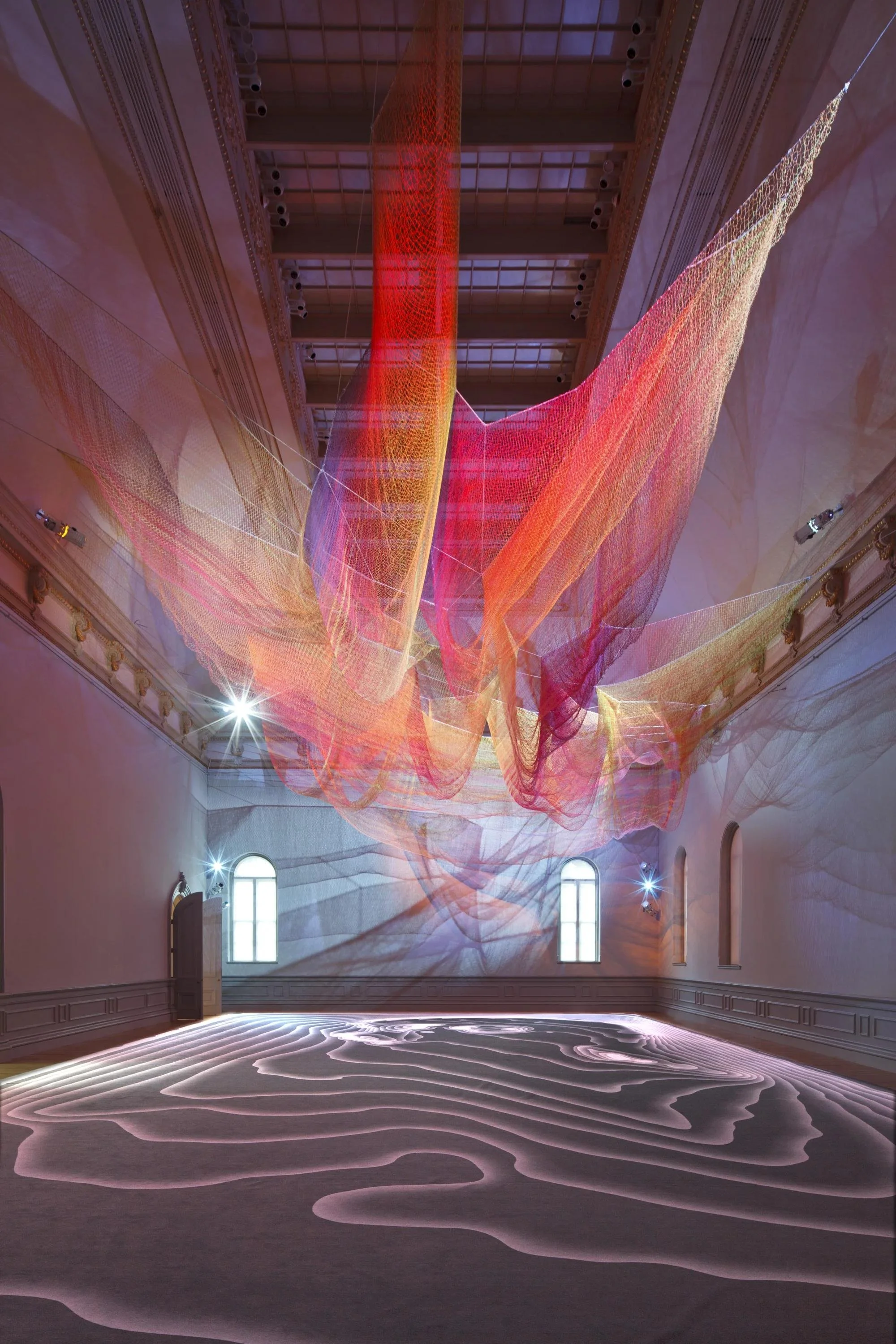
Janet Echelman, 1.8. A vast suspended sculpture made from interconnected fibres: movement in one part changes the whole. A striking image of creation as a living web of relationship and dependence.
Creation is not a warehouse filled with separate objects. It is a living web of gift and dependence.
Pull one thread violently enough, and the fabric begins to tear.
We see that tearing in polluted rivers, exhausted soil and disappearing species.
We buy without seeing where something came from. We throw away without asking where “away” is.
Somebody else’s body, community or landscape carries the cost.
Creation is pulled apart whenever we take the gift but refuse the relationship.
But Christ does not watch this wounded world from a safe distance.
Through Christ, God is reconciling all things, making peace through the blood of the cross.
The one in whom creation holds together enters creation’s wounds.
God is present in vulnerable flesh. Present in suffering. Present even in death.
Not because suffering is good, but because nowhere lies beyond the love of God.
And then comes resurrection: new life emerging from within the wound.
Reconciliation means relationships healed:
Humanity with God.
Neighbour with neighbour.
Human beings with the whole living world.
The reconciliation begun in Christ is as wide as creation itself.
And then Jesus brings this cosmic vision down to the kitchen table.
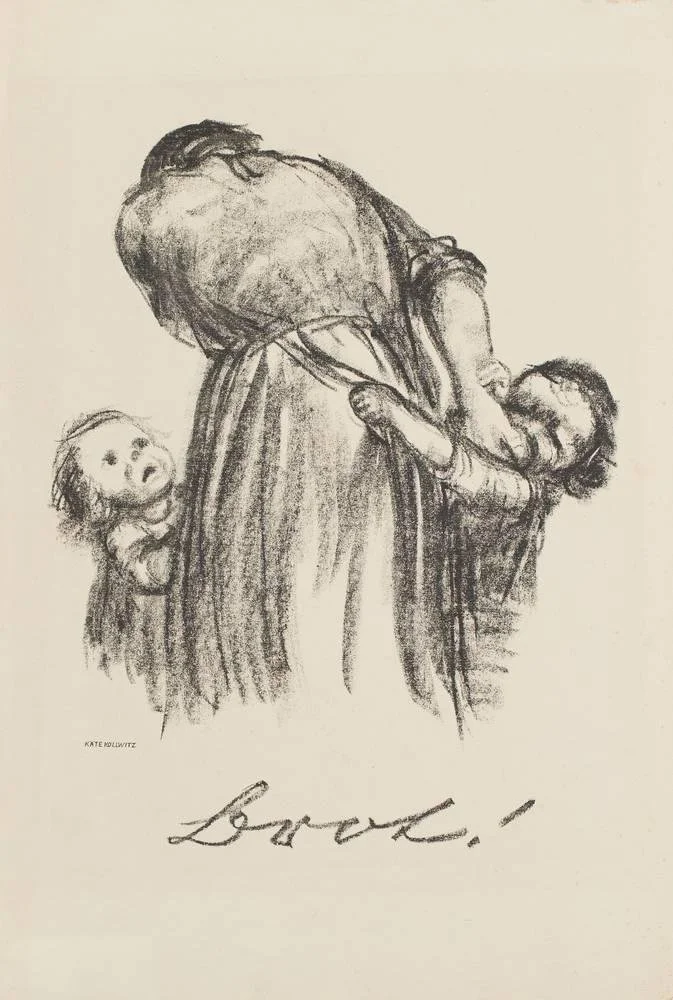
The question of daily bread is never abstract when someone is hungry.
Käthe Kollwitz, Brot! (Bread!), 1924.
What will we eat?
What will we eat? What will we drink? What will we wear?
These are not luxuries. They are the necessities of embodied life.
Jesus speaks to people for whom tomorrow’s provision could not be taken for granted. Frightened people asking whether there will be enough.
And Jesus says:
“Do not worry.”
That can sound careless. It can sound like telling somebody facing hunger or anxiety that they would feel better if only they trusted God more.
But Jesus does not dismiss their needs.
He names them.
Food. Drink. Clothing.
Jesus is deeply concerned with bodies: with hunger and sickness; with shelter and daily bread.
The God in whom galaxies hold together cares about tomorrow’s breakfast.
And this passage begins with a therefore.
Just before Jesus tells people not to worry, he says:
“You cannot serve God and wealth.”
This is not simply advice about managing anxiety.
Jesus places two kinds of security before us.
There is the security we acquire, accumulate and defend. And there is the security created through trust, justice and sharing.
Wealth tells us:
Keep more than you need, because tomorrow is uncertain.
The kingdom says:
Share what you have, because your neighbour should not have to face tomorrow alone.
Jesus tells us to look at the birds.
God feeds them through soil and rain, seeds and habitats. Through the relationships of a living world.
Jesus is not promising that faithful creatures will never face danger. He is asking us to recognise a world sustained by relationship and gift.
God feeds people through relationships too: through land, through labour, through communities choosing to share.
Where people go hungry amid abundance, the failure is not that God has created too little.
It is that we have failed to share justly.
Jesus stands within the Jewish traditions of manna, gleaning, Sabbath and Jubilee.
Manna could not be endlessly hoarded. Gleaning placed limits upon ownership. Sabbath gave workers, animals and land their rest. Jubilee imagined debts released.
Again and again, God limits accumulation so that vulnerable people are not crushed beneath it.
Perhaps poverty is not only a problem experienced by people without wealth.
Perhaps it is also created by those who cannot imagine having enough.
So when Jesus tells us to strive first for God’s kingdom and righteousness, he is not telling frightened people to try harder not to feel afraid.
He is calling into being a community that carries their fear with them.
A kingdom where food, clothing and shelter are not somebody else’s private problem.
A people who become part of God’s provision for one another.
We are called to become the answer to our own prayers.
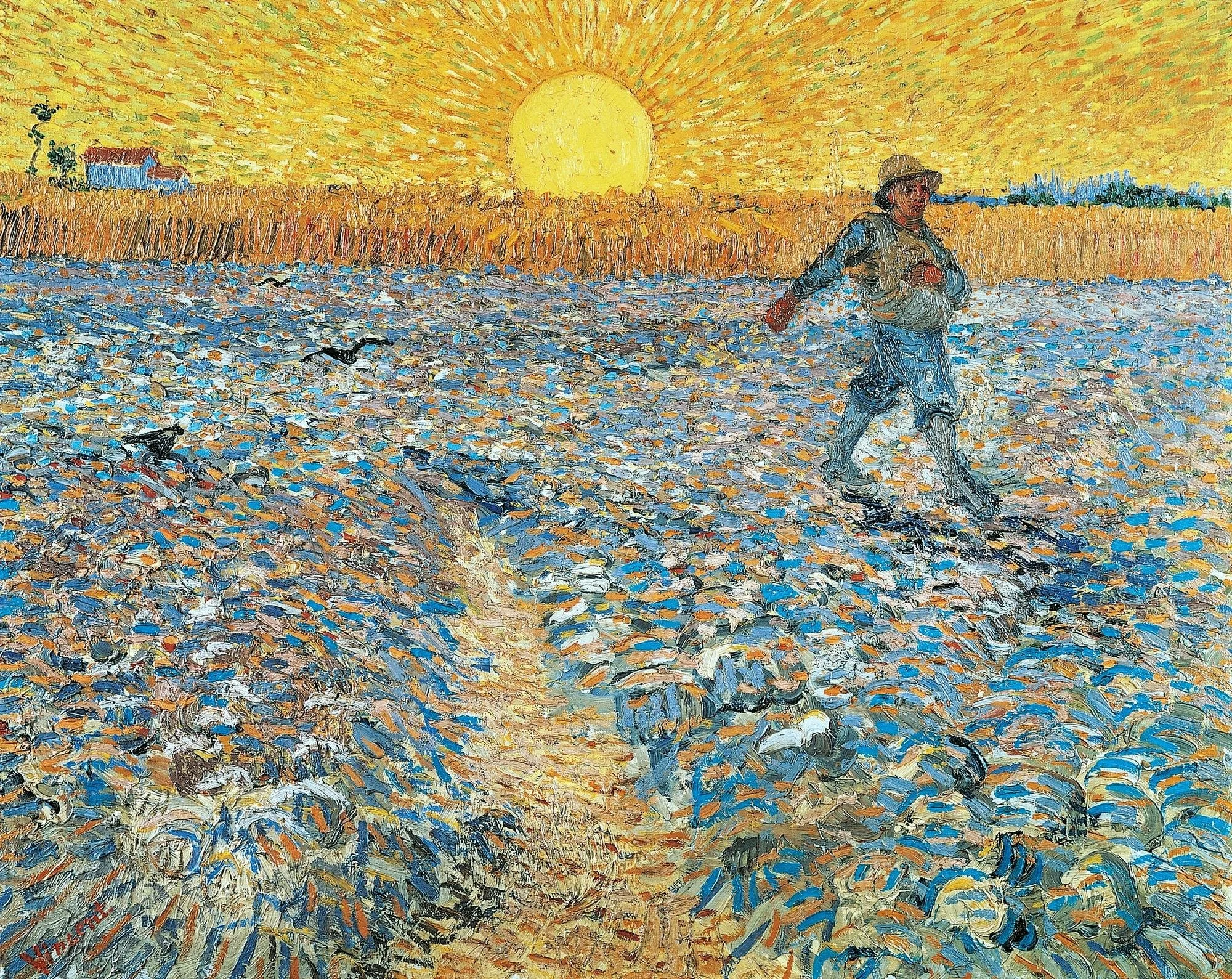
Earth, seed, sunlight and human labour: abundance is something we receive, tend and share.
Vincent van Gogh, The Sower, 1888.
Open for what?
So what might that mean for us?
We worry about money. We worry about this building. We worry about whether enough people will come, give and volunteer.
Those are not foolish concerns.
Roofs need repairing. Heating costs need paying.
But anxiety can persuade us that our task is simply to preserve what we have.
The question is not only:
How do we keep the doors open?
It is:
Open for what?
What is our faith if we speak about God’s abundance while organising our life around the fear that there will never be enough?
Perhaps cherishing this building does not mean protecting it from ordinary life.
Perhaps it means letting it breathe.
Toys and muddy shoes. Shared meals. People who cannot pay. People who do not know the rules.
Perhaps the signs that this building is truly loved are the signs that it is being used to love.
And that is already happening.
It happens at Little Pips. Around the tables at Camelot. Whenever food is shared, coffee is offered or somebody is known by name.
These things are not separate from the Gospel.
They are places where the reconciliation of all things becomes visible.
Not complete. Not perfect.
But visible.
We cannot solve the climate crisis or end poverty alone.
But we can ask:
What might we strengthen?
What might we share?
What limit might we accept so that another person or creature can flourish?
The kingdom of God is not merely an idea we admire.
It is a way of arranging life.
And every week, we are shown what that looks like.
The table
Sunlight and rain. Soil and seed. Vines and grain. Human skill and labour.
All gathered into bread and wine.
And through the ordinary necessity of a meal, Christ gives himself to us.
The cosmic Christ comes to a table.
The one through whom galaxies were made becomes bread placed in our hands.
And we pray:
“Give us today our daily bread.”
Not:
Give me mine.
Give us ours.
Give bread to the person who grew hungry while producing mine.
Give bread to the frightened family.
Give bread to the stranger.
And teach us to recognise that the bread has already been given.
The earth has produced. Human hands have laboured. God has provided abundance.
Our calling is to receive it with gratitude, place limits upon our taking and make sure that the gift is shared.
Christ holds all things together.
Stars and seas. Bread and bodies. Soil and labour. Frightened people and uncertain tomorrows.
And the Church becomes Christ’s body when we join in that work:
Holding together what fear and greed pull apart;
receiving the earth as gift;
cherishing the life God has made;
and making sure that the gift is shared.
Amen.
Preached by the Revd Ruth Edmonds at St Philip & St James, Leckhampton, on Harvest Sunday, 4 October 2026. Readings: Colossians 1:15–20 and Matthew 6:25–33.