
Hagar, the woman at the well, and what it means truly to listen.
This sermon was preached by Rev Ruth at Pip & Jim’s during our Season of Listening, drawing on Genesis 16:7–13 and John 4:4–26.
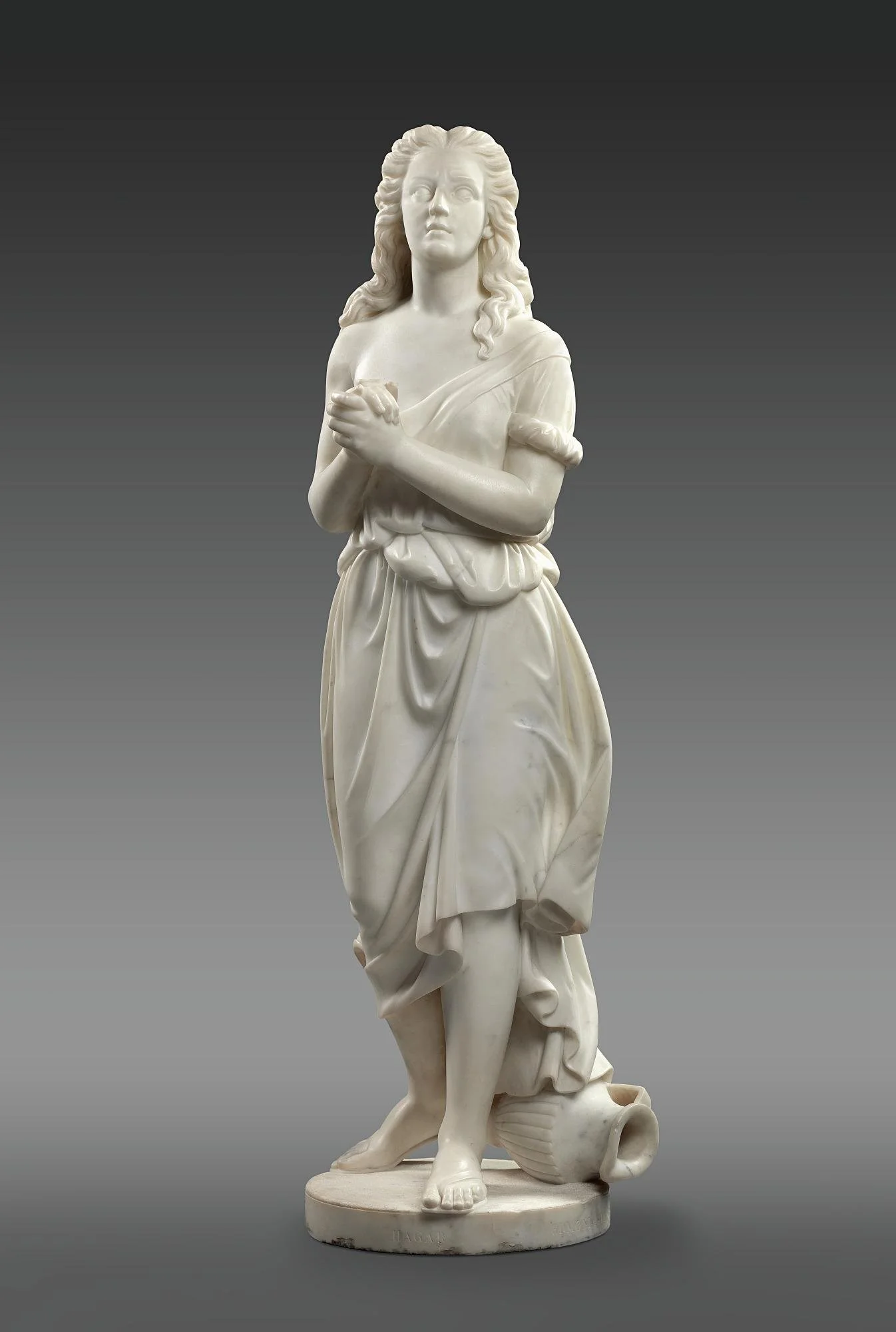
Edmonia Lewis, Hagar, 1875. Lewis presents Hagar alone and dignified, as a person in her own right rather than a supporting figure in Abraham’s story. Explore the artwork through the Visual Commentary on Scripture.
Most of us know something of what it is to be misread: to have somebody decide who we are before we have said a word.
Sometimes that is irritating. Sometimes it is almost funny. You wear a dog collar and people assume you know exactly what God is doing, where the spare key is, and why the heating has stopped working. The wrong assumption is corrected over coffee and forgotten by lunchtime.
But when the person doing the interpreting holds power over us, being misread can shape an entire life.
That is where our two women begin.
They are not misunderstood in some minor, correctable way. They are read, judged and reduced by people who never asked them who they were.
When other people write our stories
Hagar is an enslaved woman, given to Abram so that Sarai might obtain a child through her body.
She is not asked.
She is not consulted.
She exists in the story, at first, only as a means of securing somebody else’s future.
The Samaritan woman has fared little better at our hands, centuries later.
Preachers have returned again and again to her five husbands and drawn from them a verdict:
Immoral.
Notorious.
A cautionary tale.
But the text never tells us how she came to have five husbands. She may have been widowed, divorced or abandoned. We do not know.
We supplied a story ourselves and then preached it as though it were hers.
Perhaps this is the pattern we most need to notice.
We meet someone.
We decide quickly what kind of person they are.
Then we stop listening, because we have already decided that we know.
The God who asks a question
We might expect God, in Genesis 16, simply to comfort Hagar. To offer sympathy for a hard situation and send her on her way.
But look at what happens.
The angel of the Lord finds her beside a spring in the wilderness and calls her by name:
“Hagar.”
Then the angel asks her a question:
“Where have you come from, and where are you going?”
And Hagar answers.
This is not surveillance. It is encounter.
God does for Hagar what Abram and Sarai have not done.
God speaks to her.
God asks about her life.
God waits for her to speak back.
The angel tells her that her son is to be called Ishmael, meaning “God hears”, because God has heard her affliction.
Then, in a moment almost too remarkable to pass over quickly, Hagar names God:
El Roi.
The God who sees me.
An enslaved Egyptian woman, alone in the wilderness, speaks about God with an authority nobody has given her.
Hagar is not merely a sufferer awaiting comfort.
She is already a theologian.
Seen, but not yet free
Yet we must not let that beauty close the story too neatly.
Hagar is told to return to the household that mistreated her. Abram and Sarai are not summoned to change.
God’s seeing is real. It is precious. But being seen is not yet the same as receiving justice.
We must never turn this passage into advice that somebody enduring abuse should return quietly and bear it.
Hagar’s story leaves us with a wound the text does not resolve.
A conversation at the well
At the well, we encounter another woman whose life has already been interpreted by others.
But Jesus does not deliver a moral lecture to a woman he has already judged.
He asks her for water.
He places himself in need of something she can give.
Then he lets her question him.
She asks about the well, about their ancestors, about worship and about where God may rightly be found.
She brings genuine knowledge and genuine disagreement to the conversation, and Jesus takes both seriously.
This is not Jesus explaining obvious truths to an ignorant woman.
It is a theological conversation.
She speaks.
She questions.
She challenges.
She perceives.
And Jesus reveals himself to her.
Just beyond the end of the passage, she returns to her town. She tells people what has happened, and many begin to believe because of her testimony.
The one who was interpreted becomes the one who interprets Christ to others.
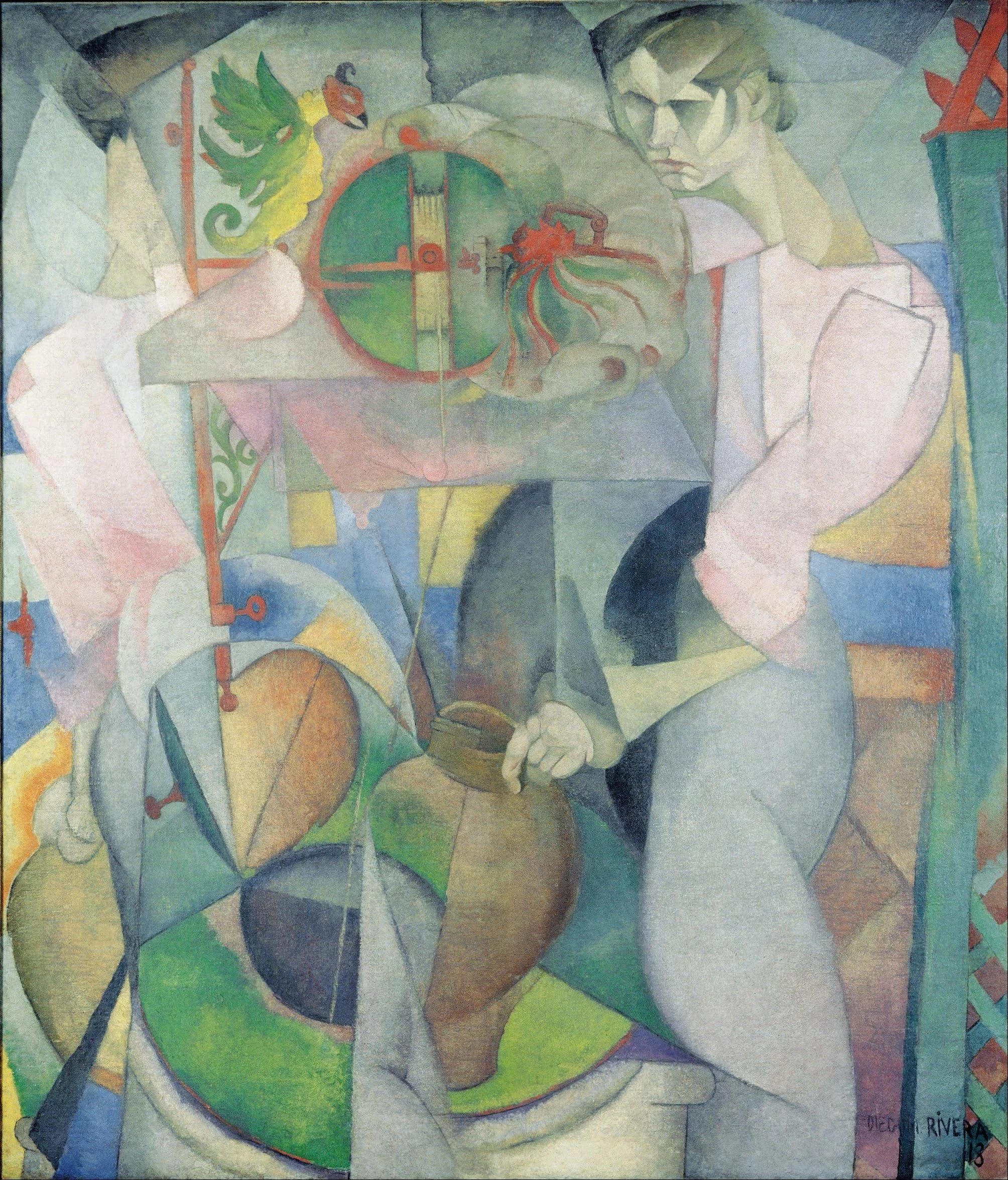
Diego Rivera, The Woman at the Well, 1913. The woman remains a strong and clearly defined presence within Rivera’s fractured composition. Explore the artwork through the Visual Commentary on Scripture.
The woman other people thought they understood becomes the person through whom they encounter something new of God.
Hagar does this too.
Her circumstances are not transformed, but her testimony remains in Scripture. She names God for every generation that follows:
The God who sees me.
Both women become witnesses.
Both speak about God from outside the recognised centre.
Both reveal something that the people with greater religious and social power have failed to perceive.
Listening that costs us something
So where does this leave us as we begin our own Season of Listening?
Not with a simple answer, but with a question that has some cost attached to it.
It is possible to see somebody
and still leave the system unchanged.
It is possible to listen kindly
and retain all the power.
It is possible to invite testimony
and quietly disregard anything that unsettles us.
God’s seeing asks more of us.
It asks whether the person we called difficult might be telling the truth.
Whether the person we treated as needy might be carrying revelation.
Whether welcome means allowing someone through the door, or allowing their presence to change the Church.
We are not listening because the Church at the centre possesses God and simply needs to decide whom else to include. We are listening because God is already beyond the boundaries we have drawn.
God may already be speaking through people we have called peripheral.
God may already be asking questions we have not thought to ask.
God may already be revealing possibilities we cannot yet see.
The question is not only whether we will make room.
It is whether we will recognise God when God speaks from the edge.
Whether we will trust what we hear.
And whether we will allow it to change us.
Take a moment to listen
When have you been misread?
When have you decided too quickly that you understood somebody else?
Whose voice might we welcome, but not yet fully trust?
Are we prepared to be changed by what we hear?
You do not need to answer everything. One honest response is enough.