
Can Forgiveness Change the Way We Use Power?
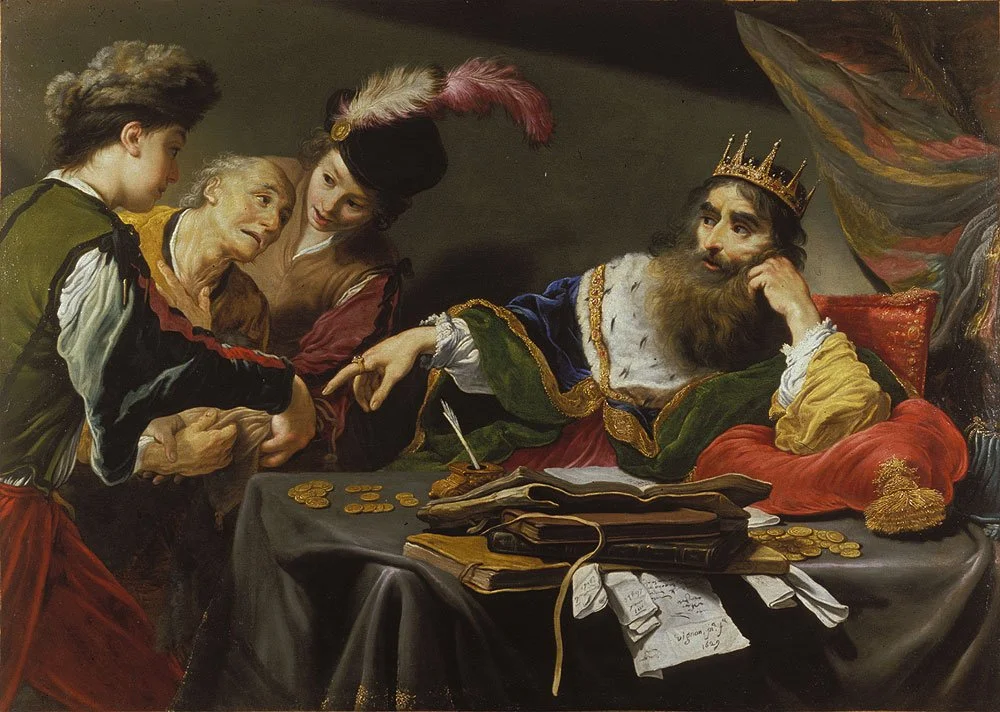
The Parable of the Unforgiving Servant, Claude Vignon, 1629. Public domain, via Wikimedia Commons.
A sermon preached by the Revd Andrew Spurr, who led our worship at St Philip and St James, Leckhampton.
Amos 5.18–24 and Matthew 18.21–35
The Bible does not always speak with one simple voice. It records a journey with God, including humanity’s wrong turns and God’s repeated call back to covenant, justice and fullness of life.
In this sermon, the Revd Andrew Spurr asks what Scripture’s teaching about debt and forgiveness might mean for the way we exercise power, conduct our relationships and live together as a Christian community.
The Bible as a journey
I like to think that the older I get, the fewer things get my goat. But one reliable exception is being told, “The Bible says…”, as though our sacred texts speak with one voice.
I find it more helpful to see Scripture as a journey: a story organised around our relationship with God. Like the stories of our own lives, that journey contains wrong turns as well as right ones.
The initiative is God’s
At the heart of that journey is God’s initiative. God invites us into life: into covenant with God and into life in all its fullness.
We are invited whoever we are, worthy or not, and usually not. Abraham has to step out into the unknown. Moses is a fugitive murderer. Isaiah feels morally inadequate. Amos does not think he comes from the right sort of family.
But this is not simply a story about our individual relationship with God. It is a collective story. The Bible speaks of people being called together into covenant: first Israel, and then the Church, the community of the new covenant.
The real test of faith is not what we say about our personal relationship with God. It is how that relationship changes the way we live with one another.
When I was a young Christian, I was rather wistful for the harmonious Church described in Luke’s idealised picture of the early community in Acts. It was at university that I began to realise that much of Scripture is actually about people getting things wrong and trying to put them right.
With the possible exception of Philippians, Paul’s genuine letters are largely written because the churches he founded are having some sort of argy-bargy.
The Christian faith is not a guarantee that we will all get on. Its claim is more interesting than that: it can turn us into people we would not otherwise have been, and that transformation will show itself in the way we conduct our relationships with one another.
Debt has no place in following God
This brings us to something else that is remarkably consistent throughout the biblical story. God’s covenant community is not supposed to be organised around debt.
That may sound rather unexpected. But debt is not simply a financial matter. It can become a way of living under someone else’s leverage. It can diminish our freedom and narrow our choices.
Think about the difference between generations of students. A generation ago, many graduates left university with little or no debt. They had greater freedom to choose work that was socially useful, politically challenging or personally risky.
Today, many leave with debts so large that they need a secure income simply to service them. Their choices are narrowed. Their capacity to take risks, or to speak prophetically, is weakened.
It is not confined to students. How many people have found themselves making decisions at work, not because they believe something is right or honourable, but because they need the salary to service their debts?
The land of Israel is understood as God’s gift, not as a commodity that individuals can accumulate without limit. A person’s temporary misfortune should not permanently dispossess a family of its inheritance.
If a poor Israelite needed a loan, that person was not to become a source of profit. Interest was prohibited on loans to fellow Israelites. The logic is wonderfully simple:
You cannot turn the liberation God has given you into another person’s bondage.
Every seven years, debts were to be cancelled. The purpose is stated with extraordinary directness: “There need be no poor among you.”
Those who had sold themselves into slavery because of debt were also to be released after six years.
These provisions are intended to ensure that the community under God’s covenant can flourish. One person’s misfortune must not become another person’s opportunity for control.
When wrong turns happen
The prophets repeatedly raise their voices against a society that has lost its way.
Amos condemns those who “sell the righteous for silver, and the needy for a pair of sandals”. Debt has become a mechanism for turning fellow human beings into assets.
And so God rejects their worship. Their festivals and solemn assemblies mean nothing when the society that gathers for them has abandoned justice:
“Let justice roll down like waters,
and righteousness like an ever-flowing stream.”

“Let justice roll down like waters, and righteousness like an ever-flowing stream.”
Amos 5.24
“Let justice roll down like waters, and righteousness like an ever-flowing stream.” Amos 5.24.
Isaiah and Micah make the same connection. Isaiah condemns those who accumulate houses and fields until there is no room for anyone else. Micah condemns those who covet fields, seize houses and take away a person’s inheritance.
This is not simply a complaint about individual greed. It is an attack on the covenant itself: the social order through which God’s people are meant to live together.
And that brings us to Jesus’ parable.
Jesus and debt
Matthew places this story within a section about how the Church, the community of the new covenant, is to be ordered.
It begins with the disciples asking who is greatest and then asking how much they are required to forgive.
The parable takes us straight into the world of debt.
The first servant owes his master ten thousand talents. That is an absurd amount, roughly equivalent to the combined annual revenues of the major Herodian territories over about twelve and a half years. It is deliberately ridiculous. Silly money.
But in the ancient world, debt was not simply about money. Then, as now, it was a mechanism of hierarchy, patronage and control.
Debt created dependence. Creditors gained power over debtors, and rulers could maintain order through taxation and indebtedness.
The astonishing thing in Jesus’ story is that the master simply cancels the debt.
The servant is free.
Yet almost immediately, he encounters someone who owes him a much smaller amount. Instead of extending the freedom he has received, he demands repayment and has the man imprisoned.
Why?
Because he cannot imagine life outside the system that has just been cancelled for him.
He has received liberation, but continues to reproduce the system of leverage and extraction.
That, I think, is the real force of the parable.
It is not simply saying, “You have been forgiven, so you should forgive other people.” It is asking us to imagine what a community would look like if it actually lived as though forgiveness were real.
Matthew uses the same word for “debt” in this parable as he uses in the Lord’s Prayer:
“Forgive us our debts, as we also have forgiven our debtors.”
The parable dramatises that prayer.
God’s forgiveness is imagined as the cancellation of debt. Human forgiveness is the enactment of that same cancellation within the community.
We are invited to recognise first that we are people who have received extraordinary compassion. We are then asked to pass that compassion on.
How do we hold people in debt?
“Debt” here need not mean only money.
We can hold other people in debt through judgement, resentment, expectations, status, shame or the power we exercise over them.
The question Jesus puts before us is whether we will use whatever power we possess to keep others indebted to us, or whether we will release them from the things that diminish their freedom to become fully alive.
You see this most often in gossip, where a good impression of someone is undermined by a story that diminishes their standing, often whispered.
You learn in a church that often the unloveliest parts of us stem from pain, just as a great deal of anger stems from pain. You learn to listen for the pain behind the anger.
As pain is acknowledged, this opens the possibility of recognising trauma. Trauma suggests a story that might give anger and pain a context.
A community shaped by forgiveness
The Christian community is not simply a collection of people who have been forgiven.
It is meant to be:
A place where forgiveness becomes a way of life.
A place where people are not trapped by their past.
A place where failure does not become permanent exclusion.
A place where power is used to enable rather than control.
A place where compassion received becomes compassion offered.
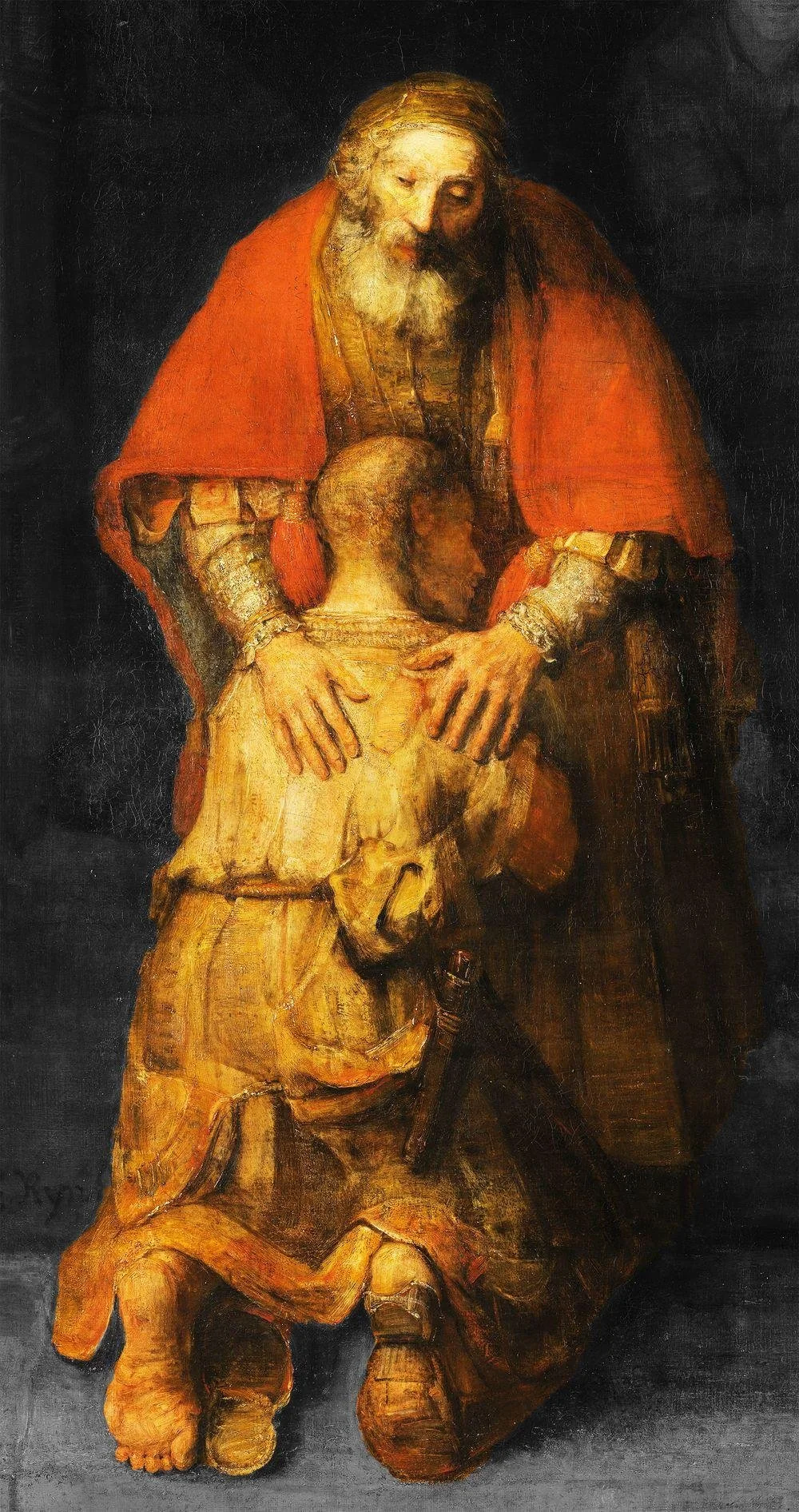
Compassion received becomes compassion offered.
The Return of the Prodigal Son, Rembrandt, c. 1668.
Compassion received becomes compassion offered. Rembrandt, The Return of the Prodigal Son, c. 1668.
Perhaps that is what it means to travel together under God’s covenant.
It does not mean that we never get things wrong. It means that when we do, we find ways of releasing one another, repairing what has been damaged and making room for one another to flourish.
God’s invitation is always towards life in all its fullness.
Does the way we live together make that life more possible, for ourselves and for one another?